
Blue food seeds and pathways toward climate-resilient nature futures for the ocean
Clarifying how local initiatives can contribute to climate-resilient blue food futures across diverse social-ecological settings.
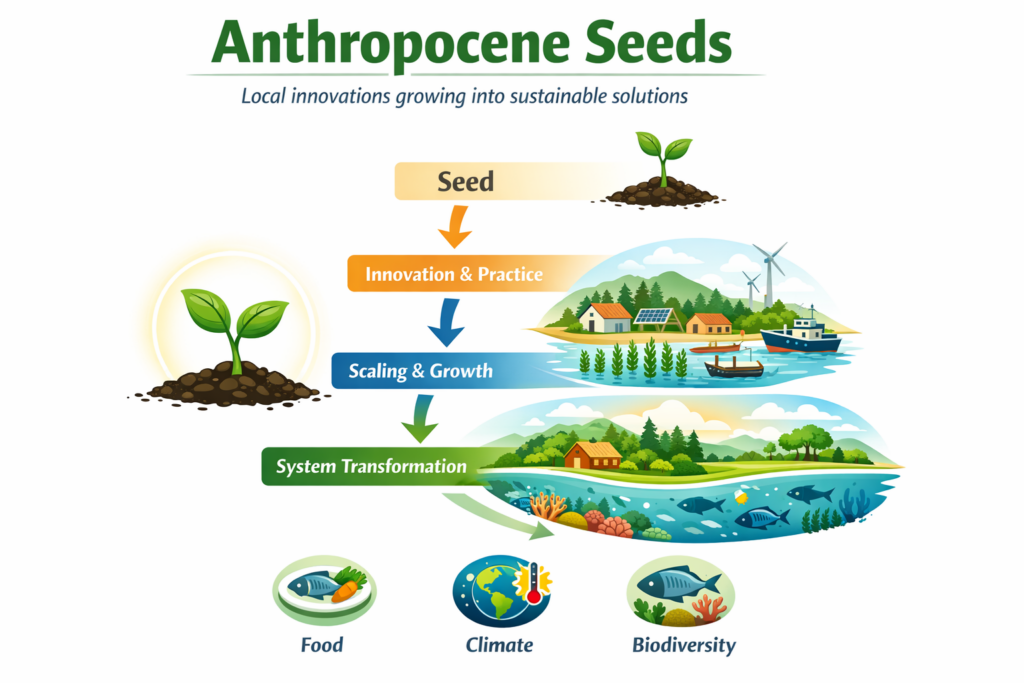
Credit: William Cheung
Climate change and other human pressures pose increasing risks to blue food systems, especially in regions already vulnerable to food and nutrition insecurity. At the same time, emerging local initiatives, innovations, and practices may provide important pathways for transformational adaptation. This work focuses on identifying and analyzing these “blue food seeds,”, defined here as promising but still relatively small or under-recognized initiatives that could help support more sustainable, resilient, and equitable blue food futures under climate change. Building on the seeds concept and climate risk approaches, we aim to identify blue food seeds with transformational potential, assess whether such seeds are present in regions facing the highest compound climate risks, and examine which biological, social, and governance factors shape their suitability and benefits in different contexts. By linking seed typologies with climate risk and adaptation potential, this study will help clarify how local initiatives can contribute to climate-resilient blue food futures across diverse social-ecological settings.
• Lead: Prof. William Cheung, Director and Professor, Institute for the Oceans and Fisheries, University of British Columbia